
Showing posts with label Israel. Show all posts

US-Israel Inch Toward Wider, More Dangerous War

October 14, 2024 (NEO - Brian Berletic) - Beginning in October 2023 a renewed cycle of violence began destabilizing the Middle East. Hamas’ October 7, 2023 military operation into Israeli-held territory served as a pretext for Israel, not to dismantle Hamas itself, but to conduct an indiscriminate punitive military operation against all of Gaza.


Israel all but admitted as much, with Israeli Defense Forces spokesman Rear Admiral Daniel Hagari admitting “thousands of tonnes of munitions had already been dropped on the tiny strip” by October 10, 2023 and that, “right now we’re focused on what causes maximum damage.”

While the Western media repeatedly refers to Hamas’ October 7, 2023 attack as “Iranian-backed,” the West itself has admitted that Iran had no knowledge of the impending operation, let alone any role in it. This resembles deliberate attempts by the US to infer Iraqi culpability regarding the September 11, 2001 terrorist attacks on the US, despite officially admitting Iraq played no role, all to serve as a partial pretext for the eventual US invasion and occupation of Iraq from 2003 onward.

Omitted from deliberately deceptive narratives trying to link Iran to Hamas is the fact that Hamas has a long-standing history of serving as an extension of US aggression in the region, rather than serving as a bulwark against it. In 2012, Hamas publicly announced it would mobilize against the Syrian government on the side of US-backed and armed militants. For years, Hamas fighters would play a role in fighting the Syrian government and its Iranian, Russian, and Hezbollah allies.

For years, Hamas has worked in tandem with Israel itself to frustrate efforts to establish a two-state solution, perpetuating hostilities, and serving as a continuous pretext for continued Israeli aggression.

Creating an Impossible Dilemma for Iran

The ultimate goal of Israel’s punitive operation against Gaza is to create an impossible dilemma for Iran and its allies and, eventually, a permissive environment for wider conflict across the region.

While Iran does not support Hamas, it supports the Palestinian people and their right to resist what the UN recognizes under international law as illegal Israeli occupation. Iran and its allies, including Lebanon-based Hezbollah and Yemen-based Ansar Allah (referred to across the Western media as “Houthis”) were compelled to assist the Palestinians.

Hezbollah has since exchanged fire with Israeli military targets along the Israeli-Lebanese border, while Ansar Allah has conducted interdiction operations against Israeli-bound shipping through the Red Sea.

Israel has used this as a pretext to escalate further, striking Iran’s consulate in Syria on April 1, 2024, and a series of terrorist attacks and targeted assassinations against Hezbollah culminating in the death of Hezbollah’s Secretary General Hassan Nasrallah.

Both escalations were met by Iranian retaliation. Iran conducted a large-scale attack on Israel using stand-off weapons including drones, cruise missiles, and long-range ballistic missiles in mid-April and a larger ballistic missile strike in early October.

Both strikes were conducted with considerable restraint.

The mid-April strike was preceded by Iranian warnings, providing the US and Israel days to prepare. The second strike, although conducted on short notice and involving a larger number of ballistic missiles, was designed to demonstrate Iran’s ability to penetrate Israeli air defenses rather than to maximize damage.

Latest Lebanon Pager Terrorist Attack Predictable, Preventable

September 20, 2024 (NEO - Brian Berletic) - Western media is calling an indiscriminate Israeli terrorist attack across Lebanon that has killed several, including at least one child and injured thousands, “unprecedented” and “sophisticated”. Yet nothing about the attack, which reportedly involved 5,000 pagers rigged with remotely detonated explosives before distribution, was unpredictable or unpreventable.


Reuters in its article, “Israel planted explosives in 5,000 Hezbollah’s pagers, say sources,” would report:

The operation was an unprecedented Hezbollah security breach that saw thousands of pagers detonate across Lebanon, killing nine people and wounding nearly 3,000 others, including the group’s fighters and Iran’s envoy to Beirut.

The Lebanese security source said the pagers were from Taiwan-based Gold Apollo, but the company said it did not manufacture the devices, but were made by a European firm with the right to use its brand.

Reuters reported that up to 3 grams of explosives were hidden inside a batch of new pagers, exploding when “a coded message was sent to them, simultaneously activating the explosives.”

Reuters reports that the pagers originated from a Taiwan-based manufacturer, who in turn claims the devices were assembled in Europe with their permission to use their brand.

The pagers purchased by and for distribution to Hezbollah’s security, administrative, medical, relief, and adjacent networks spent the entirety of their time from manufacturing to shipment in potential enemy hands before arriving in Lebanon, exposing them to at a minimum well-documented security breaches the US and its proxies have implemented for well over a decade.

This time, the devices were transformed into remotely detonated explosives with enough energy to seriously maim or kill those holding the devices or maim and kill those located nearby.

The attack was made possible not by a lapse in security or because the threat was until now inconceivable, but only by a complete lack of relevant national and operational security policy and procedures involving the procurement of technology for official and/or domestic use versus the well-understood dangers of sourcing technology from abroad.

A Long, Documented History of Turning Tech into Ticking Time bombs

American citizen and former US National Security Agency (NSA) contractor Edward Snowden was among the first to suspect the pager attack was not the result of an Israeli “hack” compromising the batteries of the devices, but was instead the result of the devices being tampered with to include explosives either at the factory or at a shipping facility. In a September 18, 2024 post on social media network X, Snowden included photos from 2013 of NSA teams opening packages and tampering with IT devices during transit.

Snowden would comment:

I keep thinking about this Top Secret photo from the revelations of mass surveillance back in 2013, revealing how the NSA poisoned commercial shipments in transit (often at airports) to spy on the ultimate recipients. Ten years later, and shipment security never improved.

In a 2015 article, this author warned about the national security implications of depending on other nations for information technology. The article cited Popular Science mentioning a process called “interdiction,” which it describes as a process, “in which they intercept mailed goods and replace them with infected versions.”

Also cited was a 2013 Australian Financial Review article titled, “Intel chips could let US spies inside: expert,” describing a multitude of cybersecurity breaches and the likelihood that the US NSA was likely “embedding back doors inside chips produced by Intel and AMD, giving them the possibility to access and control machines.”

The Grim Prospects of US Proxies: Ukraine, Israel, and Taiwan

October 23, 2023 (NEO - Brian Berletic) - As Russia’s special military operation (SMO) approaches two years of intense fighting, having parried Ukraine’s “spring counteroffensive” and with the initiative shifting to Russian forces, Western capitals are now admitting they are reaching the limits to remaining support for Kiev.

During the Ukrainian offensive alone, the Western media has admitted Ukrainian forces have suffered catastrophic losses in both manpower and material. The Ukrainian economy has all but been replaced by heavy subsidies from the United States, Europe, and the International Monetary Fund (IMF). Ukrainian infrastructure including its power grid and ports have suffered severe damage the collective West is unable to repair in a timely manner.

Ukraine’s territory has shrunk. Four oblasts, Lugansk, Donetsk, Zaporozhye, and Kherson are now considered by Moscow as part of the Russian Federation. Crimea had already joined the Russian Federation following a referendum conducted in 2014 after the US-backed overthrow of the elected Ukrainian government.

In fact, from 2014 onward, Ukraine’s sovereignty had been stripped away, with the resulting client regime installed into power by the US answering to Washington at the expense of Ukraine’s best interests. To say Ukraine’s status as a viable nation state hangs in the balance because of this arrangement would not be an understatement.

Ukraine, as a US proxy, has suffered irreversible losses economically, politically, socially, and militarily. In a wider sense, Europe is also politically captured, led by the European Union bureaucracy who, like the Ukrainian government, serves Washington’s interests entirely at the expense of Europe’s collective interests.

Germany stands out as a particularly poignant example, having ignored the destruction of the Nord Stream pipelines, imposing sanctions on Russia to restrict any remaining hydrocarbons required by Germany’s industry and public, beginning a process of recession and deindustrialization.

Europe’s wider economy is suffering from similar setbacks, setbacks that cannot be offset by alternatives such as US liquefied petroleum gas (LPG) moved by ship across the Atlantic Ocean which will always be more expensive than Russian hydrocarbons piped in directly to Europe.

US Stretched Thin as Ukraine Offensive Fails, Israelis Threaten Large-Scale Conflict

October 16, 2023 (NEO - Brian Berletic) - As Ukraine’s “spring counteroffensive” nears five months of intense fighting and equally intense losses achieving only negligible gains, Kiev’s sponsors in Washington, London, and Brussels find their military stockpiles nearing depletion and their military industrial base stretched far beyond capacity. This single conflict has tested the limits of US military power, diplomatic reach, and economic influence, exposing significant and growing weakness.

At the same time cracks begin to emerge militarily, diplomatically, and economically in the US and among its European allies, the rest of the globe continues its pivot away from the previous US-dominated global order, toward a broader balance of power under multipolarism, further undermining US foreign policy objectives.

Rather than reflect on this paradigm shift and find a rational place for the collective West in this emerging global order, the US and its allies are doubling down in an attempt to reassert their slipping international system and specifically through the use of proxy conflicts.

Just as the US-led collective West is using Ukraine as a focal point to confront, encircle, and contain Russia, the US has maintained Israel as a foothold in the Middle East for decades vis-à-vis Iran and its allies.

In East Asia, the US maintains a presence of tens of thousands of American troops in South Korea and Japan, while expanding its military presence in its former colony of The Philippines. It also has heavily invested in separatist elements on the Chinese island province of Taiwan, setting up the same sort of dynamics seen in Ukraine and Israel that have led to violent conflict in Eastern Europe and the Middle East.

It stands to reason that if Washington’s proxy war with Russia in Ukraine is unsustainable and a losing proposition, compounding the strain on US military, diplomatic, and economic power by investing in one or more additional proxy wars around the globe will only accelerate the collapse of US primacy around the globe and the rise of multipolarism.

Ukraine: A Failing Proxy War 

A recent New York Times article titled, “Has Support for Ukraine Peaked? Some Fear So,” highlights growing concern over Washington’s stretched global ambitions. It notes that with growing hostilities in the Middle East and US military aid now being divided between two US proxies, Ukraine and Israel, there is a growing realization that difficult decisions will be necessary.

The article also admits that even before conflict erupted in the Middle East between Israel and Hamas, expanding into a broader and large-scale Israeli military operation against the Palestinians, both support for and interest in Ukraine was already waning.

Beyond political will, the New York Times admits to technical limitations of Western support for its proxies globally.

The article admits:

European vows to supply one million artillery shells to Ukraine by March are falling short, with countries supplying only 250,000 shells from stocks — a little more than one month of Ukraine’s current rate of fire — and factories still gearing up for more production. 

Adm. Rob Bauer, who is the chairman of the NATO Military Committee, said in Warsaw that Europe’s military industry had geared up too slowly and still needed to pick up the pace.

It should be noted that a previous New York Times article revealed that Russia is currently producing as many artillery shells annually as the combined output of the US and Europe if production is expanded by 2025 at the earliest.

Israel: Empire's Apex Provocateur

May 26, 2021 (Brian Berletic - LD) - In the wake of Israel’s latest campaign of aggression - it is important to keep an eye on the much larger picture this decades-long conflict fits into.


For a more in-depth discussion, see this long-format talk between Brian Berletic and Angelo Giuliano - which goes into the history of Israel and the wider geopolitical context its decades of regional belligerence fits into. 


Brian Berletic, formally known under the pen name "Tony Cartalucci" is a geopolitical researcher, writer, and video producer (YouTube here, Odysee here, and BitChute here) based in Bangkok, Thailand. He is a regular contributor to New Eastern Outlook and more recently, 21st Century Wire. You can support his work via Patreon here.

US Middle East "Peace Deal" Designed to Perpetuate Conflict

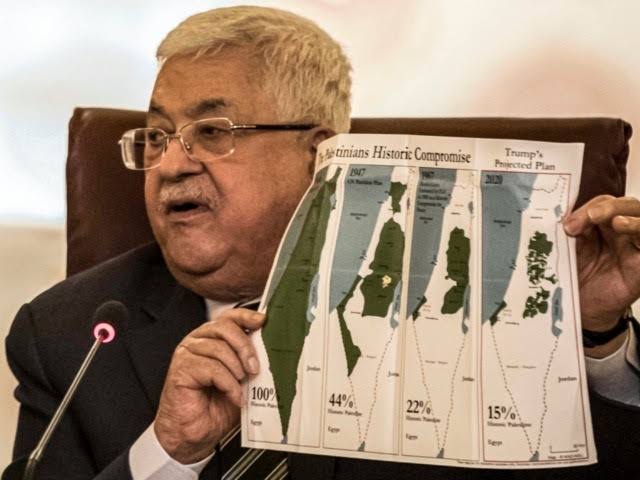
February 19, 2020 (Tony Cartalucci - NEO) - A deal that is entirely unacceptable to one of its principal parties isn't a deal at all. In the case of the US-proposed "Middle East peace plan" - unsurprisingly endorsed by the US and Israel and few others - everything about it is designed to sabotage peace and perpetuate conflict - perhaps even expand it.


The London Guardian in its article, "Palestinians cut ties with Israel and US after rejecting Trump peace plan," would note what are obvious conditions Palestine could not and should not accept:
The blueprint, endorsed by the Israeli prime minister, Benjamin Netanyahu, calls for the creation of a demilitarised Palestinian state that would exclude Jewish settlements built in occupied territory and remain under near-total Israeli security control.
Demilitarizing Palestine and subjecting it to occupation blatantly illegal under international law and what would undoubtedly be continued Israeli aggression, provocations, and encroachment is akin to unconditional surrender and subjugation - conditions no government could be expected to accept with Palestine being no exception.

An op-ed published by Al Jazeera titled, Trump's Middle East plan may have a silver lining: Trump's plan will not make the Palestinians' lives better, but it could help dismantle the disastrous Oslo order," would aptly describe the deal as:
Basically, Trump's plan promises the Israelis an almost full realisation of the Zionist objectives to establish a Jewish state on all of historic Palestine, while offering the Palestinians "prosperous apartheid", ie life under occupation with more money but no dignity and basic rights.
Of course, promises of money may or may not be fulfilled. A Palestine rendered defenseless and entirely dependent on ill-willed sponsors has no way to ensure such promises are fulfilled.

Thus the "peace plan" is yet another demonstration of Washington's continued malign presence in the Middle East and its absolute disinterest in changing course. The Guardian would also note that several Arab allies of the US would side with Washington's proposal, prioritizing joint belligerence toward Iran rather than solidarity with Palestine.

Helping ease Arab allies of Washington out of their pretend concern for Palestine will - Washington hopes - help them focus entirely on US plans to create a united front against Iran as US power and influence in the region slips. 

Politics and Power, Not Religion 

This disingenuous and counterproductive "peace plan" does however help illustrate that the current, ongoing conflict in the Middle East is not driven by religion, neither Zionist nor Islamic extremism, but rather by politics and in particular - designs to maintain Western hegemony in the region that has existed since the collapse of the Ottoman Empire. Religion and its perversion through extremism is simply used to augment and propel these designs.


Were the conflict purely a matter of religion - Sunni and Shia'a soldiers wouldn't be fighting side-by-side in Syria against US-sponsored terrorists. Arab nations would not be abandoning Palestine in favor of joining the US and Israel in their collective belligerence against Iran. And no nation in the region - save for Israel - would accept the most recent "peace plan" proposed by the US.

Seeing through a "peace plan" intentionally designed to further inflame emotions and deepen divides and understanding the true interests driving regional conflict will help establish common ground rather than erode it. The actual people living in Israel have more in common with ordinary people living in Palestine than with the current circle of special interests dominating the Israeli government.

Ordinary people seek peace and stability - to live out their lives and provide for their families. Tensions and the conflicts they lead to only disrupt ordinary people from achieving this basic desire - whether they are Israelis or Palestinians.

The US proposal illustrates to people on either side of the divide that the US is not an honest broker and that the current process posing as pursuing peace should be dismantled.

Because of this, and just as the US has faded from other areas of the world and even from other areas within the Middle East - the US will fade from prominence regarding the Israeli-Palestinian question - hopefully opening the way for more honest brokers to move in and propose a genuine peace deal that will right injustices and provide for the best interests of ordinary people rather than merely pose as doing so while serving the interests of a malign few.

Tony Cartalucci, Bangkok-based geopolitical researcher and writer, especially for the online magazine “New Eastern Outlook”. 

Israel: America's Mad Dog in Syria

March 20, 2017 (Tony Cartalucci - NEO) - Israel has played an increasingly provocative role in the destructive conflict unfolding within and along Syria's borders since 2011. To many observers, it appears Israeli policy borders between opportunistic and unilateral aggression. In reality, Israel's role in the Syrian conflict fits a much larger and long-term pattern with Anglo-American plans not only for Syria but for the entire region.


A more recent row between Israel and Syria was the reported incursion of Israeli warplanes into Syrian airspace, including attacks near the eastern Syrian city of Palmyra. Palmyra hosts an ongoing battle between Syrian forces and the self-proclaimed "Islamic State" (ISIS) terrorist organization. Israeli airstrikes against Syrian forces - then - would have facilitated ISIS operations in the region.

Israel is a State Sponsor of Terror, Not a Champion Against it

Israel has existed as a nation-sized, defacto forward operating base for Anglo-American interests since its creation in the 20th century. It has pursued aggressive regional policies that have intentionally pitted itself against its neighbors as a means of maintaining a Western foothold and point of leverage in North Africa and the Middle East for decades.

Ongoing conflicts between Israel and Palestine are fueled by an orchestrated strategy of tension between a manipulated Israeli population and controlled opposition - Hamas - politically backed, armed, and funded by Israel's own regional collaborators including Saudi Arabia and Qatar.

When proxy military operations began against the Syrian state in 2011 under the cover of the US-engineered "Arab Spring," Israel along with Jordan and Turkey, played a direct role in backing militants and undermining Damascus.

While Jordan has played a more passive role, and Turkey a more direct role in facilitating proxy militant forces, Israel has played the role of "unilateral provocateur." While Turkish, US, and other "coalition" forces are unable to directly attack Syrian forces, Israel - posing as a unilateral regional player - can and has done so regularly since 2012.

CNN in its article, "Israeli jets strike inside Syria; military site near Palmyra reportedly targeted," would note:
In November 2012, Israel fired warning shots toward Syria after a mortar shell hit an Israeli military post, the first time Israel had fired on Syria across the Golan Heights since the 1973 Yom Kippur War.

Israeli jets have been striking targets in Syria since at least 2013, when US officials told CNN they believed IDF jets had hit targets inside Syrian territory.

CNN would also report:
Israeli strikes may have gone as far inside Syria as the capital. In 2014, the Syrian government and an opposition group both said an IDF strike had hit Damascus' suburbs and airport.
And while Israeli politicians and military officials claim their aggression seeks to stop the transfer of weapons to terrorist organizations, organizations they deem as "terrorist" are in fact the sole forces within Syria fighting actual, internationally recognized terrorist organizations including Al Qaeda, its  various subsidiaries and affiliates, as well as the Islamic State itself.

Paradoxically, these genuinely terrorist organizations have existed along Israel's border enjoying defacto protection from Israeli forces from Syrian military operations.

Israel's Role as America's "Mad Dog" is No Secret 

Israel's geopolitical role as "unilateral mad dog" has been a matter of stated US policy since at least the 1980s - and in specific reference to America's repeated attempts to undermine and overthrow the Syrian state amid much larger objectives aimed at Iran and the region as a whole.


A 1983 document - part of a deluge of recently declassified papers released to the public - signed by former CIA officer Graham Fuller titled, "Bringing Real Muscle to Bear Against Syria" (PDF), states (their emphasis):
Syria at present has a hammerlock on US interests both in Lebanon and in the Gulf -- through closure of Iraq's pipeline thereby threatening Iraqi internationalization of the [Iran-Iraq] war. The US should consider sharply escalating the pressures against Assad [Sr.] through covertly orchestrating simultaneous military threats against Syria from three border states hostile to Syria: Iraq, Israel and Turkey. 

The report also states:
If Israel were to increase tensions against Syria simultaneously with an Iraqi initiative, the pressures on Assad would escalate rapidly. A Turkish move would psychologically press him further. 
In 2009, US corporate-financier funded policy think tank, the Brookings Institution, would publish a lengthy paper titled, "Which Path to Persia?: Options for a New American Strategy toward Iran" (PDF), in which, once again, the use of Israel as an apparently "unilateral aggressor" was discussed in detail.


US Aid to Israel Aids Who and Toward What End?

September 22, 2016 (Tony Cartalucci - NEO) - Recently, the United States just renewed military aid to Israel in a decade-long, $38 billion deal - the largest of its kind in American history. It represents a significant increase in aid, roughly $3.8 billion a year - expected to be supplemented by additional assistance through US Congress - up from $3 billion per year previously.


The Atlantic in an article titled, "Why Does the United States Give So Much Money to Israel?," attempted to explain the reasoning behind the otherwise unreasonable and unprecedented assistance by claiming:
Defenders of the deal would say it’s necessary. Dalton described the uptick in spending as a natural extension of the long-standing relationship between the United States and Israel, “as well as close ties between those countries and their peoples.” She described the “fraught neighborhood” surrounding Israel: war-torn Syria to the northeast, Hezbollah-influenced Lebanon to the north, and an Islamist insurgency in Egypt’s Sinai to the south, all of which help explain the historically high promise of $5 billion in missile funding over the next 10 years.
However, experienced geopolitical analysts will point out that the United States does not have "friends," "allies," or "relationships" - only interests and those who serve them. And while the Atlantic attempts to explain the deal as a means of maintaining a "relationship," it and other publications admit that there are "strings attached." If examined carefully, these strings reveals just what interests this supposed "relationship" serves.

CNBC would say just that in its article, "Big US military aid package to Israel has strings attached," claiming:
...it's structured so that more Israeli defense spending goes to U.S. companies. Israel's long-standing special arrangement for funds from the United States previously allowed Israel to spend 26 percent of the money in Israel — on Israeli-made defense products. But that provision is being phased out over the first five years of the deal.
In other words, the ten year, $38 billion aid package is first and foremost welfare for US defense contractors, not Israel whose own defense spending adds up to $16 billion per year - dwarfing annual US "aid." The deal is to encourage further Israeli dependency on America - dependency that lends Washington further leverage over both Israel and the region.

Who is Israel's Biggest Enemy?

Its government and their foreign sponsors.

May 10, 2016 (Tony Cartalucci - NEO) - The ongoing conflict consuming the Middle East is the result of Western hegemonic designs aimed at reordering the region and beyond, into a geopolitical structure more suitable for its own interests. In accomplishing this, the centers of power across the West - Washington, Wall Street, London, and Brussels - have elected several nations as intermediaries through which various aspects of this process are being implemented.

Saudi Arabia has contributed significantly in the indoctrination, financing, and arming of terrorists sent across the region and indeed the world. Turkey has likewise served in arming and supplying terrorists, as well as staging them ahead of operations launched into Syrian territory and even resupplying them once in Syrian territory. To a lesser but still notable extent, Jordan has done this as well.

One nation often either neglected or analyzed inappropriately - but very much involved - is Israel.

The Israeli Regime's Role 

The government of Israel has also colluded with the West regarding the ongoing conflict across the Middle East, likely in a way most Israelis are either not aware of or are not in support of.

Israel would be implicated in Pulitzer Prize-winning veteran journalist Seymour Hersh's 2007 article, "The Redirection," in which he reported:
To undermine Iran, which is predominantly Shiite, the Bush Administration has decided, in effect, to reconfigure its priorities in the Middle East. In Lebanon, the Administration has coöperated with Saudi Arabia’s government, which is Sunni, in clandestine operations that are intended to weaken Hezbollah, the Shiite organization that is backed by Iran. The U.S. has also taken part in clandestine operations aimed at Iran and its ally Syria. A by-product of these activities has been the bolstering of Sunni extremist groups that espouse a militant vision of Islam and are hostile to America and sympathetic to Al Qaeda.
The report would go on to reveal the relationship between the government in Israel and state sponsors of terrorism including Saudi Arabia, stating:
The policy shift has brought Saudi Arabia and Israel into a new strategic embrace, largely because both countries see Iran as an existential threat. They have been involved in direct talks, and the Saudis, who believe that greater stability in Israel and Palestine will give Iran less leverage in the region, have become more involved in Arab-Israeli negotiations.


The article, published years before the so-called "Arab Spring" in 2011 after which the war in Syria began, would turn out to be prophetic. Israel has worked, albeit more quietly, in tandem with the United States, Turkey, and just as Hersh warned, Saudi Arabia, to wage a devastating proxy war against Syria, Iraq, Lebanon, Iran, and to some extent even Russia.

Israel's borders and safe havens established just beyond them, particularly in the illegally occupied Golan Heights, harbor US State Department-listed terrorist organizations including the Al Nusra Front. On multiple occasions Israel's own press covered incidents where the Israeli Defense Force (IDF) was caught trafficking Nusra fighters back and forth over their border with Syria in ambulances.

Pentagon Admits that Israel is a Nuclear Power

March 31, 2015 (Vladimir Platov - NEO) - In early February, the Pentagon declassified reports on Israel’s nuclear weapons program which was carried out until 1987. According to these documents, Israeli scientists were capable of producing a hydrogen bomb by that time. Although these facts were largely ignored by the Western media, some analysts have noticed that the declassification of these secret reports suspiciously coincided with the recent, rapidly deteriorating relationship between the US and Israel. As Tel Aviv started a massive campaign of criticism aimed at the Obama administration, both in the US media and worldwide, the Pentagon’s revelations were quick to follow. It is also noteworthy that only the facts on the Israeli nuclear weapons program were declassified, while information regarding similar activities of NATO allies (in particular Italy, France, and West Germany) remained locked up.


The 386 page report “Сritical technology assessment in Israel and Nato nations,” was prepared in 1987 by the Institute for Defense Analyses (IDA) and examined the capabilities Israel had already had at that time to produce nuclear weapons. In particular, the study underlines the fact that Israel’s secret laboratories, engaged in the development of an atomic bomb, were on par with the key research nuclear arsenals of the US: Los Alamos, Lawrence Livermore and Oak Ridge National Laboratory.

According to this report, by the mid-80s Israeli experts were at the same stage of research and development of various nuclear weapons the hydrogen bomb in particular, reached by American scientists between 1955-1960. IDA experts were courageous enough to recognize that in certain areas the Israelis have even surpassed their American colleagues of the time, in particular those working in the “Raphael” Israeli secret lab, who had managed to propose unconventional ways of achieving nuclear fission that would have allowed them to create their own version of the hydrogen bomb.


Global Threat? US Policymakers Admit Iran is Defending Itself

March 16, 2015 (Tony Cartalucci - NEO) - US policymakers admit that Iran's strategy is "largely defensive," and both aggressive and defensive tendencies are largely in response to US policy in the Middle East and Central Asia.

The US-based RAND Corporation, which describes itself as "a nonprofit institution that helps improve policy and decisionmaking through research and analysis," produced a report in 2009 for the US Air Force titled, "Dangerous But Not Omnipotent : Exploring the Reach and Limitations of Iranian Power in the Middle East," examining the structure and posture of Iran's military, including its Islamic Revolutionary Guard Corps and weapons both present, and possible future, it seeks to secure its borders and interests with against external aggression.

The report admits that:
Iran’s strategy is largely defensive, but with some offensive elements. Iran’s strategy of protecting the regime against internal threats, deterring aggression, safeguarding the homeland if aggression occurs, and extending influence is in large part a defensive one that also serves some aggressive tendencies when coupled with expressions of Iranian regional aspirations. It is in part a response to U.S. policy pronouncements and posture in the region, especially since the terrorist attacks of September 11, 2001. The Iranian leadership takes very seriously the threat of invasion given the open discussion in the United States of regime change, speeches defining Iran as part of the “axis of evil,” and efforts by U.S. forces to secure base access in states surrounding Iran.
Such a narrative stands in direct contradiction of daily propaganda emanating from Western media monopolies portraying Iran as a global threat to peace and stability, and in particular, "bent on" attacking the US and its allies, particularly Israel, for no other reason but fulfilling fanatical, ideological hatred.

The recent political theater centered around the US and Israel, portrays a US attempting to accommodate Iran versus an Israel fighting an existential battle against a determined aggressor. Behind the rhetoric, however, the RAND Corporation lays out the specific facts, revealing a reality quite to the contrary.


It reveals an embattled, besieged Iran seeking to stave off foreign encirclement, destabilization, and literal invasion. RAND openly notes that the conflict is not about "defending" Israel or preserving US national security, but instead, centered on America's attempts to project power into the Middle East - half a world away from its own shores, and Iran's attempts to resist foreign hegemony.


Obama-Netanyahu "Fallout" is Theater - Planned in 2009

US and Israel attempting to establish feigned "diplomatic row" to justify "unilateral" Israeli attack on Iran.

March 2, 2015 (Tony Cartalucci - LD) - In a 2009 US policy paper published by the corporate-financier funded Brookings Institution, it was made clear that the US was determined to provoke Iran into a conflict and effect regime change at any cost - up to and including an outright military invasion and occupation of Iran with US troops.


However, before it came to that, the Brookings Institution's policymakers explored other options including fomenting US-backed political unrest coupled with covert, violent force, the use of US State Department listed foreign terrorist organizations to carry out assassinations and attacks within Iran, and limited airstrikes carried out by either the US or Israel, or both.

In retropspect, 6 years on, all of these tricks have not only been attempted to one degree or another in Iran, but have been demonstrably employed in neighboring Syria to diminish its strength - which according to Brookings - is a necessary prerequisite before waging war on Iran.

And of particular interest - considering what appears to be a growing diplomatic row between the United States and Israel - is just how precisely the US planned to covertly back what would be made to appear as a "unilateral" Israeli first strike on Iran - an attack that appears to be in the process of being justified through a carefully orchestrated propaganda campaign now unfolding.

From the Mouths of US Policymakers Themselves 

The Brookings Institution's 2009 policy paper titled, "Which Path to Persia? Options for a New American Strategy Toward Iran," makes clear that negotiations with Iran over its nuclear program is merely theater, and that it will be used to give the world the impression that the United States explored all possible "peaceful" options before resorting to violent regime change.  The report states specifically that:
...any military operation against Iran will likely be very unpopular around the world and require the proper international context— both to ensure the logistical support the operation would require and to minimize the blowback from it. The best way to minimize international opprobrium and maximize support (however, grudging or covert) is to strike only when there is a widespread conviction that the Iranians were given but then rejected a superb offer—one so good that only a regime determined to acquire nuclear weapons and acquire them for the wrong reasons would turn it down. Under those circumstances, the United States (or Israel) could portray its operations as taken in sorrow, not anger, and at least some in the international community would conclude that the Iranians “brought it on themselves” by refusing a very good deal.

Of course, Iran - as admitted to by Brookings themselves - is not governed by irrational leadership, and would not turn down a genuinely "superb offer." The Brookings Institution admits openly that the US pursues a dual track foreign policy - one for public consumption (making "superb offers") and another aimed at ensuring Iran looks as unreasonable as possible.

Old Tricks, Old Dogs: Israeli Attacks on Syria

December 9, 2014 (Tony Cartalucci - NEO) - Israel has once again conducted air strikes against the Syrian government and its people, in yet another act of unprovoked aggression and international criminality. The New York Times would report in their article, "Syria Reports New Strikes From Israel Near Capital," that: 
Israeli warplanes struck at least two areas near Damascus on Sunday, the Syrian Armed Forces General Command said in a statement, apparently ending a months long hiatus in strikes attributed to Israel against sophisticated weaponry destined for Hezbollah in Lebanon.  
Israeli officials refused to confirm or deny the latest reports from Syria, maintaining a policy of ambiguity that is meant to allow the other side to save face and to stave off retaliation.
Strikes hit government facilities in the capital as well as Damascus International Airport. One must wonder why Israel attacks what it has called "regional threats" in Damascus when it allows terrorist groups including Al Qaeda's Al Nusra Front to park tanks along its borders. 

Israel Strikes At Only Viable Nation Fighting ISIS in Region 

At this current juncture in the Syrian crisis the illusion of "moderate rebels" has so utterly evaporated that even groups the US supposedly "vetted" and armed with sophisticated anti-tank weapons are now openly aligned with the so-called Islamic State (ISIS). The implications of this are, and as the Syrian government has said since 2011, that the Syrian government is fighting a battle not against its own people or "pro-democracy" forces, but heavily armed sectarian extremists either flying the flag of Al Qaeda, or openly having pledged allegiance to it. 

It becomes increasingly difficult for casual observers then, to understand why nations like Israel are still conducting attacks directly against the government of Syria while providing defacto sanctuaries for ISIS terrorists and their affiliates along their border with Syria in the occupied Golan Heights. It would appear to the casual observer that Israel, Al Qaeda, and ISIS are in fact in league, and the conflict raging within Syria is instead a proxy war being waged from beyond its borders rather than solely within them.

Indeed, these implications are not only logical considering Israel's recent attacks, the latest in a series of attacks it has carried out in support of terrorists and against the Syrian government since 2011, but they are also backed up with documented evidence from as early as 2007. However, Israel does not act alone. 


Together, the US, Saudi Arabia, and Israel openly conspired to use sectarian militants including Al Qaeda to wage a regional proxy war against Iran and its allies - including against both Syria and Hezbollah in Lebanon. This explains why Israel has attacked both the Syrian government and Hezbollah even as both wage war on Al Qaeda, ISIS, and their affiliates.

Compounding the Israeli regime's criminality is the fact that the only forces providing a defense for regional minorities, including Christians, Jews, Druzes, and secular Muslims of all sects, is in fact Hezbollah and the Syrian Arab Army. Attacks on either undermine their ability to stem what will otherwise be unhinged regional genocide carried out by US, Saudi, Israeli, and even Qatari-backed sectarian militants. 


Beware: Israel the Eager Provocateur

August 8, 2014 (Tony Cartalucci - NEO) - With hostilities once again erupting between Israeli forces and Palestine, onlookers must keep in mind the greater agenda in which the current violence is playing out and the stated agenda of achieving hegemony over the Middle East in which Israel plays a pivotal role - as the "unilateral aggressor."

FOB Israel 

Of course, Israel does nothing unilaterally. It is a stunted, militaristic faux-state that depends entirely on the West for its continued existence. From the funds it builds its military with, to the very hardware it buys and maintains, starting from the day the modern state of Israel was founded up to and including today, Israel is in reality a state-sized forward operating base (FOB). Wikipedia defines a FOB as follows:

"The base may be used for an extended period of time. FOBs are traditionally supported by Main Operating Bases that are required to provide backup support to them.[citation needed] An FOB also improves reaction time to local areas as opposed to having all troops on the main operating base."  

As such, Israel's constant and otherwise irrational belligerence makes perfect sense. An FOB's priorities are not prosperity and peace as would a nation's, but rather to engage forward into enemy territory. The trick over the years has been to portray Israel as a nation, while propping up its constant belligerence and aggression as "self-defense." To keep this illusion in motion, Israel and its regional and Western collaborators have even created full-time enemies, including Hamas itself - a creation of Israeli intelligence and to this day primarily propped up by Saudi Arabia and Qatar, both of which are defacto regional partners with the West and of course Israel itself.

The Wall Street Journal reported in their article, "How Israel Helped to Spawn Hamas," that (emphasis added): 

"Hamas, to my great regret, is Israel's creation," says Mr. Cohen, a Tunisian-born Jew who worked in Gaza for more than two decades. Responsible for religious affairs in the region until 1994, Mr. Cohen watched the Islamist movement take shape, muscle aside secular Palestinian rivals and then morph into what is today Hamas, a militant group that is sworn to Israel's destruction.

Instead of trying to curb Gaza's Islamists from the outset, says Mr. Cohen, Israel for years tolerated and, in some cases, encouraged them as a counterweight to the secular nationalists of the Palestine Liberation Organization and its dominant faction, Yasser Arafat's Fatah. Israel cooperated with a crippled, half-blind cleric named Sheikh Ahmed Yassin, even as he was laying the foundations for what would become Hamas. Sheikh Yassin continues to inspire militants today; during the recent war in Gaza, Hamas fighters confronted Israeli troops with "Yassins," primitive rocket-propelled grenades named in honor of the cleric.

This is in fact exactly what Hamas is still being used today for - to counter real opposition movements by dividing against each other different factions of Muslims and secular organizations alike, in confusion and armed combat, preventing a greater, unified front against Western expansion and exploitation throughout the region. Extremist groups closely aligned to Hamas, including Al Qaeda and the Muslim Brotherhood, would flood into Iraq during the US occupation to "serendipitously" disrupt united Sunni-Shia'a resistance, and create bloody infighting that broke the back of meaningful opposition against foreign occupation. The same method is being used again in Syria, and with the Islamic State in Iraq and Syria's (ISIS) incursion into Iraq weeks ago, yet again against Baghdad. 


The Plundering of South Sudan

US AFRICOM, Israel, and Uganda's Dictator-for-Life Yoweri Museveni set up in South Sudan, inflame conflict, push out China and prepare to take over oil. 

January 9, 2014 (LD) - RT's report "Who is to blame for the crisis in South Sudan?" gave a succinct background on the warring factions inside the new "nation" of South Sudan and the Western genesis of the conflict. The report would state: 

The SPLM has received support from the US and Israel throughout the duration of the civil war fought between southern rebels and Khartoum, which has historically had unfriendly relations with the West and has moved very closely to China in recent times to jointly develop the country’s oil wealth prior to the separation. Romantic notions for self-determination did not motivate the West to support southern secession; the objective was to partition Sudan and deprive Khartoum of economically relevant territory in the south where most of the oil fields lie. In exchange for the financial, material, political, and diplomatic support received from the West, the new government in Juba endorsed a ‘Faustian pact’ with its sponsors to open its economy to international finance capital and multinational interests. The government in Juba even applied for IMF membership before it had even officially gained independence from Sudan.
The piece would continue by laying out the current dilemma for the West: 
Despite supporting the South’s independence with diplomatic muscle and military aid, the United States has been unable to gain a foothold in the country’s oil sector; Juba’s crippled economy remains dominated by Asian companies, primarily from China. South Sudan must rely on pipelines that run through Khartoum to export its oil, and the two countries produced around 115,000 barrels of oil per day in 2012, less than half the volume produced in the years before South Sudan's independence. Both sides have nearly gone to war over disputed oil fields that straddle a poorly demarcated border. Judging from the poor economic performance of both countries since the partition and the dramatic loss of the life in the ongoing crisis, the experiment of South Sudanese independence is failing. 
Image: Violence predictably is centered around currently 
Chinese-controlled oil infrastructure. The goal is to have 
violence drive the Chinese out just as was done by NATO 
in Libya.
The piece would go on to note that peace deals reached leaving Sudan intact could have avoided the deadly conflict now raging - and that of course is correct. However, peace is not and never was the goal of the West and its involvement in Africa - economic gain is.

Precisely because China still maintains extensive holdings in Sudan and South Sudan's oil infrastructure, the conflict will be brought to a fevered pitch - and unsurprisingly the conflict's epicenter corresponds with South Sudan's primary oil producing regions. If and when the Chinese are pushed out of South Sudan, the West will continue either across the border to establish routes for exporting their newly gained oil wealth from the landlocked country, or proceed through Kenya with or without the current government in Nairobi's backing.

The BBC would report in their article, "China's oil fears over South Sudan fighting," that (emphasis added):
The stakes could not be higher for China, the largest investor in South Sudan's oil sector, as fierce fighting continues between forces loyal to President Salva Kiir and those of his former deputy. 
Some of the largest oil fields China operates are in areas controlled by fighters backing Riek Machar, the country's vice-president until he was sacked in July. 
Oil production has already dropped by 20% since the onset of the conflict three weeks ago and more than 300 Chinese workers have been evacuated. 
The spectre of their Libyan experience also weighs heavily on the Chinese minds - project after project now lies deserted because of heavy fighting during the Arab Spring uprising of 2011, inflicting huge losses on China.
Most telling of all is the BBC's reference to Libya - another nation destroyed by Western military aggression that saw both Russian and Chinese interests crumble overnight and replaced by Western corporations. While South Sudan's chaos is being orchestrated more covertly by the West, the final goal of pushing out the Chinese and taking over is the same.

Similar covert destabilization can be seen all across what the 2006 Strategic Studies Institute's report "String of Pearls: Meeting the Challenge of China's Rising Power across the Asian Littoral" calls China's "String of Perals." This includes US-backed militants attempting to carve off the province of Baluchistan from Pakistan where China has established a port at Gwadar and at another Chinese port in the state of Rakhine, Myanmar that has been the scene of brutal, genocidal violence carried out by "democracy icon" Aung San Suu Kyi's "saffron monks" against Rohingya refugees.

Setting Up Shop in South Sudan 


Tel Aviv Regime Strikes Syria, Again

Latest Israeli attack part of wider US-Saudi-Israeli strategy. 

November 1, 2013 (Tony Cartalucci) - Israel and its Western sponsors have admitted to an unprovoked airstrike in Syrian territory this week. This is the latest of several assaults Israeli planes have carried out against neighboring Syria over the past year. CNN, in its report, "Israeli planes strike Syrian military base, U.S. official says," admits: 
Israeli warplanes struck a military base near the Syrian port city of Latakia this week, an Obama administration official told CNN on Thursday. 
An explosion at a missile storage site in the area was reported in the Middle Eastern press, but an attack has not been confirmed by the Israeli government. 
The target, according to the Obama administration official, was missiles and related equipment the Israelis felt might be transferred to the Lebanon-based militant group Hezbollah. The official declined to be identified because of the sensitive nature of the information. 
There was some confusion about the timing of the attack, with some reports saying it happened Wednesday, and others saying Thursday. 
When asked for comment, an Israel Defense Forces spokeswoman told CNN: "We don't refer to foreign reports."
Israel's Haaretz newspaper claims in its article, "Report: Israel destroyed Hezbollah-bound missile shipment in Syria," that:
According to the unnamed source, the strike targeted a shipment of missiles and related equipment Israeli intelligence estimated were to be transferred to Hezbollah. 
Earlier on Thursday, citing anonymous sources, Al-Arabiya carried a similar report. 
It said that the strikes targeted an SA-8 surface-to-air missile shipment for Hezbollah and that the two targets were destroyed.
SA-8 missiles are used in air-defense to protect airspace, and are not offensive weapons, making the recent Israeli attack all the more an egregious act of aggression in direct violation of international law.

Israel's refusal to provide details to the press highlights the perceived impunity the rogue nation believes it operates with upon the international stage - striking beyond its borders without provocation, justification, or explanation. It is precisely because of this carefully cultivated belligerent posture that Israel has been chosen to carry out such attacks against Syria, despite it being only one of several nations currently involved in the arming, funding, and direction of terrorists flooding into Syria and miring the country in a now nearly 3 year long deadly conflict.

Use of Israel as "Unilateral" Aggressor Was Long-Planned

From Turkey with love: Another Israeli attack on Syria?

Mahdi Darius Nazemroaya

Prime Minister Erdogan and his AK Party government have a track record of being deceitful, especially in regards to both Israel and Syria. No one should be surprised to hear that Israel and Turkey are collaborating together against the Syrians. With the aim of tightening the front against Syria, President Obama even travelled to Israel in March 2013 to directly broker a quick rapprochement between the governments of Israel and Turkey. Getting a public nudge from the Obama Administration, Israel and Turkey would announce that their diplomatic row was over only two days after NATO announced it had put together contingency plans for operations in Syria on March 20, 2013. Even when relations were publicly sour between the Ankara and Tel Aviv, the two countries maintained military and commercial ties.

Despite the fact that Prime Minister Erdogan denounced Tel Aviv for attacking Syria, the first fruits of Israeli and Turkish collaboration became visible in May 2013 when Israeli warplanes attacked a Syrian military research facility in the town of Jamraya with US approval, as admitted by President Obama to Telemundo. Right after the Israeli attacks the Turkish and Israeli militaries launched simultaneous exercises on their respective borders with Syria. Although the military operations were presented as uncoordinated events, both Ankara and Tel Aviv were coordinating with one another in a military posture against Syria. The Israeli and Turkish moves on their borders with Syria were probably aimed at preventing Syria from responding through intimidation. The Turkish government would also put extra pressure on the Syrians by blaming them for a terrorist attack in the Turkish border town of Reyhanli, which the Turkish activist group of internet hackers named Redhack would be revealed was known about well in advance by Turkey’s Gendarmerie Intelligence.


Mahdi Darius Nazemroaya is a sociologist, award-winning author, and noted geopolitical analyst

In Wake of US-Israeli Attack on Syria, UN Reveals Terrorists Not Government Used Sarin Gas

So-called "red line" both drawn and then crossed by US-Saudi-Israeli axis and their terrorist proxies. 

May 6, 2013 (LD) - The reasoning behind recent US-Israeli attacks on Syria has been undermined further as the UN reveals Western-backed terrorists, not the Syrian government, deployed sarin gas during the 2 year conflict. Reuters reported in their article, "U.N. has testimony that Syrian rebels used sarin gas: investigator," that:
U.N. human rights investigators have gathered testimony from casualties of Syria's civil war and medical staff indicating that rebel forces have used the nerve agent sarin, one of the lead investigators said on Sunday.

The United Nations independent commission of inquiry on Syria has not yet seen evidence of government forces having used chemical weapons, which are banned under international law, said commission member Carla Del Ponte.

"Our investigators have been in neighboring countries interviewing victims, doctors and field hospitals and, according to their report of last week which I have seen, there are strong, concrete suspicions but not yet incontrovertible proof of the use of sarin gas, from the way the victims were treated," Del Ponte said in an interview with Swiss-Italian television.
Why the Small Amounts of Sarin Cited by Washington, Riyadh, and Tel Aviv are a Set Up 

The small amounts of sarin gas reportedly used would defy any tactical or strategic sense had they been deployed by the Syrian government to tip the balance in the destructive 2-year conflict. According to the US military's own assessments of chemical weapon use during the 1980's Iran-Iraq War, only under ideal conditions and with massive amounts of chemical agents can tactical and strategic outcomes be achieved - and that conventional weapons were still, by far, superior to chemical weapons of any kind.

Unprovoked Attack on Syria: US-backed Israel Commits Egregious International Crime

The US feigns disassociation with Hitlerian act of Israeli aggression - as was planned since 2007.

Image: The West has carefully cultivated Israel into "regional bully." Immune from international condemnation, it is now being used to commit egregious war crimes against neighboring Syria, in hopes of provoking a retaliation and giving the US and its regional axis the justification it has long sought to militarily intervene.
....

May 5, 2013 (LD) - Unprovoked, Israel has attacked Syria numerous times over the past 2 days, including attacks on the Syrian capital of Damascus, in what appears to be a series of intentional provocations designed to drag the region into a wider conflict its US sponsors can then enter militarily. Neither attacked directly by Syria, nor able to cite credible evidence in regards to perceived threats Israel claims to be reacting to, the assault on Syria represents a Chapter VII breach of the United Nations Charter.

What's more, is that while the US feigns disassociation with Israel's breach of international peace, after jointly fueling a genocidal sectarian conflict within Syria's borders for the past two years, it is documented fact that the US and Saudi Arabia planned to use Israel to conduct military attacks against Iran and Syria, they themselves could not justify politically, legally, or strategically.

What is now hoped is that Syria and Iran retaliate militarily, allowing the "other shoe to drop," and for the US, UK, France, and their regional axis to directly intervene in Syria, and with any luck, Iran.

Israeli Airstrikes Signal Western Desperation in Syria

Alleged airstrikes hope to expand conflict, undermine Syrian advances, & provoke Syria and Iran to give US justification for military intervention. 

May 4, 2013 (LD) - Once again, Israel is "leaking" information about alleged airstrikes it claims it has conducted against Syria along the Lebanese-Syrian border. According to CNN's "Sources: U.S. believes Israel has conducted an airstrike into Syria," it was stated that:
The United States believes Israel has conducted an airstrike into Syria, two U.S. officials tell CNN.
And: 
The Israelis have long said they would strike at any targets that prove to be the transfer of any kinds of weapons to Hezbollah or other terrorist groups, as well as at any effort to smuggle Syrian weapons into Lebanon that could threaten Israel.
This was the same flimsy pretext used in another alleged Israeli attack on Syrian territory earlier this year.

In reality, the "other terrorists groups" Israel claims to worry about, are indeed funded and directed by the US, Israel, and Saudi Arabia as part of a long-standing, documented conspiracy to overthrow the nations of Iran and Syria.