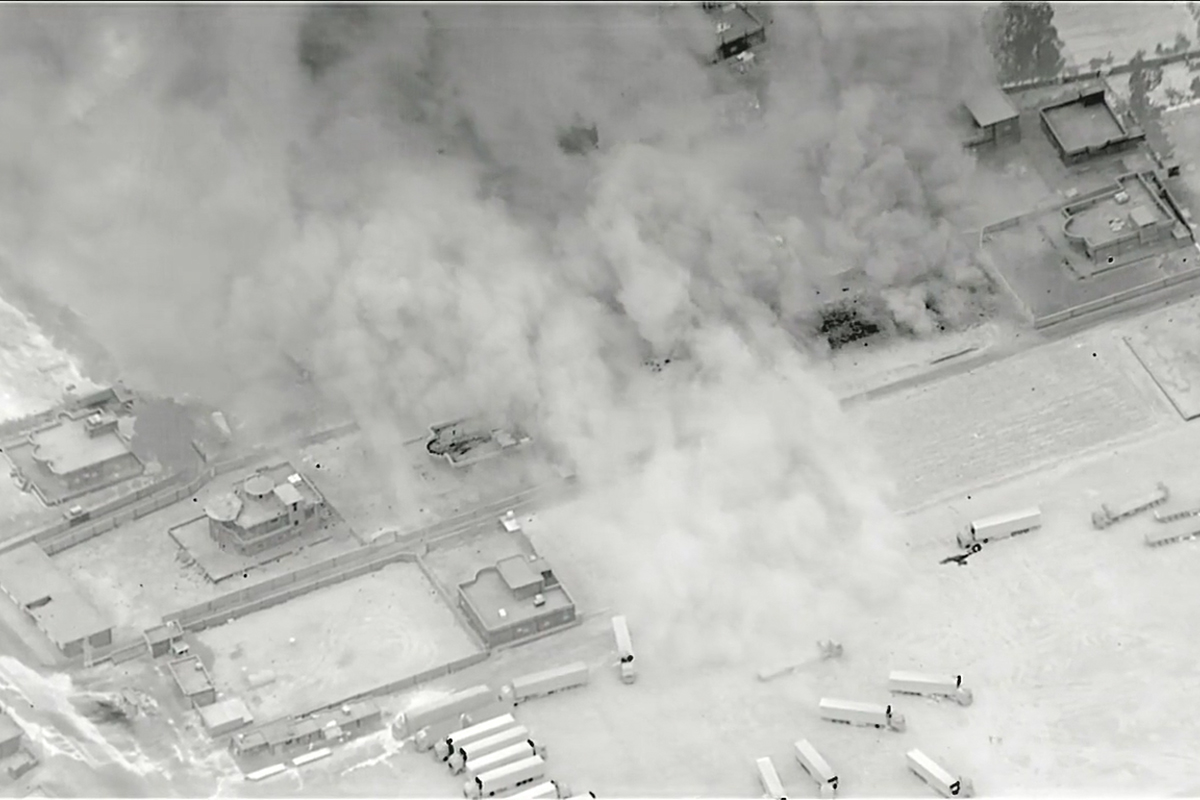
January 29, 2024 (NEO - Brian Berletic) - Rumors and announcements have swirled recently regarding the presence of US troops in Syria and Iraq, and the prospect of at least a drawdown of troops taking place in one or both locations. This follows escalating violence between local militias and US forces, who have traded missiles and airstrikes amid the ongoing Israeli invasion of Gaza and a resulting decline in regional security.
While the Pentagon was quick to deny claims that US forces might withdraw from Syria, CNN in a January 25, 2024 article, “US and Iraqi governments expected to start talks on future of US military presence in the country,” would note that discussions would “focus on whether and when it will be feasible to end the US military presence in Iraq.”
A similar process took place preceding the eventual withdrawal of US forces from Afghanistan in Central Asia, completed in August 2021.
The withdrawal from Afghanistan was interpreted at the time as a symptom of waning US power, and while that may be a contributing factor, other analysts feared it was merely a means of freeing up US resources to expand conflict elsewhere.
This fear was confirmed by US Secretary of State Anthony Blinken during a press conference in December 2022, in which he admitted:
When it comes to Russia’s war against Ukraine, if we were still in Afghanistan, it would have, I think, made much more complicated the support that we’ve been able to give and that others have been able to give Ukraine to resist and push back against the Russian aggression.
It should be noted that the US had been deliberately drawing Russia into a wider conflict in Ukraine for years leading up to Russia’s Special Military Operation. The RAND Corporation in a September 2019 policy paper titled, “Extending Russia: Competing from Advantageous Ground,” would include an entire chapter titled, “Provide Lethal Aid to Ukraine,” explaining that:
Expanding U.S. assistance to Ukraine, including lethal military assistance, would likely increase the costs to Russia, in both blood and treasure, of holding the Donbass region. More Russian aid to the separatists and an additional Russian troop presence would likely be required, leading to larger expenditures, equipment losses, and Russian casualties. The latter could become quite controversial at home, as it did when the Soviets invaded Afghanistan.
The following month, under the Trump administration, the US would begin supplying Ukraine lethal aid in the form of Javelin anti-tank missiles, ABC News would report. It was clearly the beginning of a policy meant to draw Russia in and draw as much “blood and treasure” from Russia as possible. It was at this time a withdrawal from Afghanistan was under serious consideration. It would begin under the Trump administration and finally be fully implemented under the subsequent Biden administration.
The withdrawal, in hindsight, was a clear prerequisite for freeing up the resources required for the upcoming US proxy war in Ukraine against Russia.